Benefits of Integrated Design Build Services
Table of Contents
What Integrated Design-Build Actually Is
Design-Build vs. Traditional Construction: Why Collaboration Matters
How the Integrated Design Process Reduces Risk and Surprises
Early collaboration among owners, designers, builders, and consultants
Shared decision-making and active participation
Design-Build Cost Control: Budget Certainty Without Hidden Expenses
Why traditional budgets drift
The mechanisms that create budget certainty
What budget certainty does and does not mean
Questions that separate real cost control from marketing
Design-Build Project Timeline: Why Integrated Teams Build Faster
Quality, Sustainability, and Long-Term Building Performance
When Integrated Design-Build Is the Right Fit for Your Project
Decision criteria that point toward integrated design-build
When a different model may serve you better
Trade-offs and implementation risks to plan for
How to select and contract an integrated team
Measuring whether it worked
Frequently Asked Questions
Last Updated: October 21, 2026
What Integrated Design-Build Actually Is
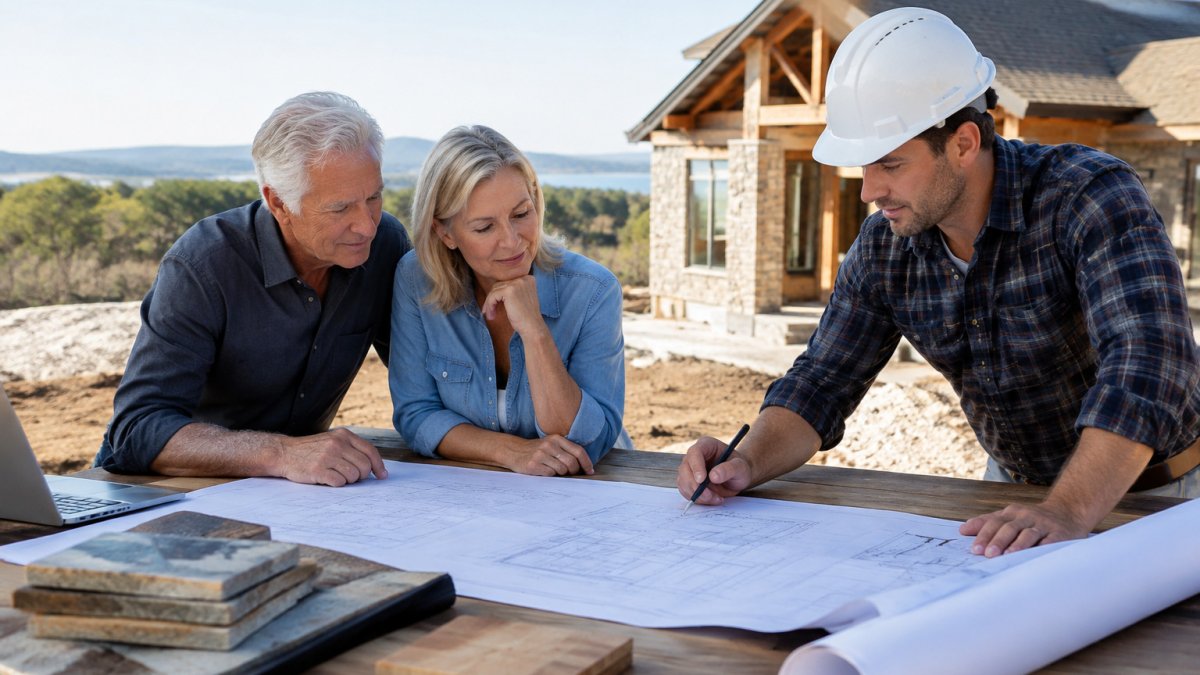
An integrated design build approach is a collaborative project delivery method where the owner, architect, engineer, and contractor work as a unified team from the earliest planning stages through completion.
The core principle: when your builder, designer, and engineers sit at the same table before the first shovel hits the ground, surprises disappear and quality improves.
With integrated design build, the team develops the design while weighing construction feasibility, cost, and timeline constraints in real time, building smarter by eliminating the back-and-forth that plagues traditional construction.
Pro Tip The earliest decisions about foundation depth, material selections, and site logistics become collaborative choices rather than design-first directives that construction teams later struggle to implement. This is where integrated design-build prevents costly rework.
Design-Build vs. Traditional Construction: Why Collaboration Matters
Integrated design-build inverts this model. The contractor is involved during design, not after. The engineer reviews feasibility as the architect sketches.
The practical difference shows up immediately.
This collaboration also means shared accountability.
Canadian Construction Association guidance on project delivery models emphasizes that collaborative approaches reduce change orders and disputes, the two biggest cost and schedule drivers in custom home construction.
How the Integrated Design Process Reduces Risk and Surprises
The integrated design process works because it surfaces problems early, when solutions are cheap. Late-stage discoveries, foundation issues, utility conflicts, structural surprises, cost tens of thousands to fix. Early collaboration prevents most of them.

Early collaboration among owners, designers, builders, and consultants
When your architect, structural engineer, civil engineer, and builder meet before design begins, they ask questions no one asks in traditional delivery. Where will utilities run? What's the actual soil condition?
This team also understands your vision directly. The owner doesn't relay requirements through an architect who interprets them for an engineer who explains them to a contractor. Everyone hears the same priorities, constraints, and goals.
Shared decision-making and active participation
In integrated design-build, decisions aren't made in isolation and handed down.
This shared ownership means fewer regrets. The owner doesn't discover mid-construction that a design decision they didn't fully understand is now locked in.
Active participation also means the owner's priorities shape the project in real time. Budget concerns? The team adjusts scope or materials immediately, not after construction starts.
Watch Out Without integrated collaboration, owners often discover late in construction that their actual needs don't match what was designed. By then, changes are expensive or impossible. Integrated design-build prevents this by keeping the owner actively involved in every major decision.
Design-Build Cost Control: Budget Certainty Without Hidden Expenses
Cost predictability is the benefit owners ask about first, and the one most often overstated. Integrated design-build improves budget control through specific mechanisms, not magic. Understanding them helps you evaluate whether the model will deliver certainty on your project.
Why traditional budgets drift
In traditional delivery, the design is completed before construction pricing is firm. Contractors bid on drawings and specifications, and the low bid often reflects unverified assumptions about site conditions, material availability, and construction methods. When reality diverges, change orders follow.
Integrated design-build closes that gap by putting construction pricing knowledge into the design conversation. When the team considers a foundation detail, the builder can speak to excavation cost, formwork complexity, and schedule impact in the same meeting where the architect presents the concept, so the cost consequence of a choice becomes visible while it is still open.
The mechanisms that create budget certainty
Four practices do most of the work:
Concurrent estimating. The builder produces budget ranges as design progresses, not after it is complete. Early estimates are ranges, and they tighten as decisions are made. Owners see the number move in real time rather than discovering it at bid.
Constructability review during design. The builder flags details that are expensive or difficult to execute before they are drawn into the permit set. Catching a problematic roof-to-wall transition during design is inexpensive; catching it during framing is not.
Value engineering as a design activity. Rather than a late-stage exercise to cut cost after bids come in high, value engineering happens continuously. The team compares assemblies, materials, and methods for cost and performance together, so trade-offs are deliberate rather than reactive.
Pro Tip Ask any integrated team how they present cost during design. A strong answer describes budget ranges at defined design milestones, a written log of cost decisions, and a clear point at which the budget converts from an estimate to a committed contract value. A weak answer promises "no surprises" without explaining how the number is tracked.
What budget certainty does and does not mean
Integrated design-build does not guarantee the lowest possible price. A collaborative team may recommend a more durable assembly or better-performing system that costs more upfront and less over the life of the home.
It also does not eliminate change orders entirely. Owners change their minds, and site conditions occasionally differ from what investigation revealed. The difference is that changes tend to be owner-driven and priced transparently, rather than contractor-driven and discovered late.
Questions that separate real cost control from marketing
When evaluating providers, ask:
At what design milestones do you present a budget, and what is the expected accuracy range at each?
How do you document cost decisions and their alternatives?
What is your process when the budget and the design diverge?
A team that answers these specifically is demonstrating the discipline that makes integrated cost control real. A team that answers with general assurances is asking you to take the benefit on faith.
Key Takeaway Budget certainty in integrated design-build comes from concurrent estimating, early constructability review, and continuous value engineering, not from a fixed contract that penalizes change. Ask how the number is tracked at each design milestone before you commit.
Design-Build Project Timeline: Why Integrated Teams Build Faster
Integrated design-build compresses timelines because design and construction planning happen in parallel, not in sequence.
The contractor can begin ordering long-lead materials while design is still being refined, pre-plan construction logistics during design, and prepare permits as design evolves rather than after it's complete.
Another timeline benefit is faster decision-making. In traditional delivery, design changes require formal change orders, approvals, and coordination among multiple parties.
Faster timelines also reduce carrying costs.
Quality, Sustainability, and Long-Term Building Performance
Integrated design-build produces better buildings because the team optimizes for long-term performance, not just initial cost or schedule.
This is especially true for sustainability. An architect might design a beautiful passive solar home. An engineer might optimize the thermal envelope.
The result is often a home that uses less energy, requires less maintenance, and ages better than comparable traditionally-delivered projects.
When Integrated Design-Build Is the Right Fit for Your Project
Most articles on this topic list benefits and stop. The more useful question is whether the model fits your project, your experience level, and your procurement constraints. Integrated design-build is a strong fit for many custom projects, but not universal, understanding the trade-offs helps you choose deliberately.
Decision criteria that point toward integrated design-build
Integrated design-build tends to perform best when several of the following are true:
The project is complex or highly customized. Unique site conditions, unusual structural requirements, specialized systems, or a distinctive architectural vision create many interdependent decisions. Early collaboration resolves those dependencies before they become conflicts.
The owner wants certainty more than the lowest bid. If budget predictability and schedule reliability matter more than squeezing out the last dollar at bid, the model's early pricing discipline pays off.
The owner wants to be involved in decisions. Integrated delivery works best when the owner participates actively. Owners who prefer to hand off the project and review at the end may find the meeting cadence burdensome.
When a different model may serve you better
Honest guidance includes the cases where integrated design-build is not the obvious choice:
Simple, repetitive projects with well-defined scope. If the design is straightforward and the site is uncomplicated, traditional design-bid-build can be efficient and competitive.
Owners who need a fully fixed price before any design work. Integrated design-build requires early commitment to a team, often before the design is complete. Owners who cannot proceed without a firm price at the outset may prefer a different structure.
Procurement rules that require open bidding. Some public and institutional owners are constrained by policies mandating competitive bidding of completed designs. Integrated delivery can still work, but the procurement approach must be designed around those constraints.
Trade-offs and implementation risks to plan for
A balanced view acknowledges what integrated design-build asks of you:
Early team commitment. You select your builder and design team earlier than in traditional delivery, which means less opportunity to compare bids on a completed design. Mitigate this by evaluating team qualifications, process, and past project outcomes carefully.
Contract complexity. Integrated delivery often uses relational or multi-party contract structures that allocate risk differently from traditional contracts. These can be more complex to negotiate and require legal review.
Coordination discipline. Collaboration only works if the team actually collaborates. Meeting cadence, decision logs, and clear roles are not optional. Ask how the team manages decisions and documentation.
Potential for groupthink. A unified team can become too agreeable. Good integrated teams build in challenge and independent review, particularly on cost and constructability.
Watch Out Do not assume that hiring a design-build firm automatically delivers integrated design. Ask specifically how the builder, architect, and engineers interact during design, who attends which meetings, and how cost and constructability input is documented. The model's benefits depend on practice, not on the label.
How to select and contract an integrated team
When you evaluate providers, focus on process and evidence rather than promises:
Team composition. Who are the actual architect, engineer, and builder, and have they worked together before? Continuity matters more than firm size.
Process documentation. Ask for a sample decision log, budget tracking format, and meeting cadence from a past project.
References with specifics. Speak with past owners about budget variance, schedule performance, and how disagreements were handled.
Contract structure. Understand how risk, contingency, and change are allocated. Have the contract reviewed by someone experienced in collaborative delivery.
Measuring whether it worked
After completion, the benefits should be measurable. Track cost variance against the budget at the point of commitment, schedule performance against the planned completion date, the number and value of change orders, energy performance against design targets, and your own satisfaction with the process. These indicators let you judge the model on outcomes rather than impressions.
Key Takeaway Integrated design-build fits complex, customized projects where the owner values certainty and participation. It asks for early team commitment, contract sophistication, and active owner engagement. Evaluate providers on process, references, and measurable outcomes, not on the label alone.
Frequently Asked Questions
What is the difference between integrated design-build and traditional construction?
Traditional construction separates design and construction into sequential phases: the owner hires an architect to complete design, then contracts with a builder to construct. Integrated design-build brings architects, engineers, contractors, and consultants together from the start. This unified team environment enables shared decision-making, identifies construction challenges during design rather than on site, and reduces change orders and costly surprises. The result is faster approvals, better cost control, and improved project outcomes.
How does integrated design-build help control construction costs?
Integrated design-build controls costs through early contractor input during design. The builder identifies constructability issues, material sourcing opportunities, and cost-saving alternatives before construction begins, preventing expensive redesigns on site. Risk-sharing between designer and builder incentivizes cost efficiency. Fewer change orders, reduced rework, and optimized construction planning translate to predictable budgets. Owners also benefit from life-cycle cost analysis, where the team considers long-term operating costs alongside upfront construction expenses.
Does design-build make a construction project faster?
Yes. Integrated design-build accelerates projects by overlapping design and construction phases rather than completing them sequentially. Early coordination between architects and contractors allows construction planning to begin during design. Shared decision-making eliminates delays from miscommunication or conflicting priorities. Faster approvals and fewer change orders keep the timeline on track. Projects typically see measurable schedule performance improvements, particularly on complex custom builds where coordination between multiple trades is critical.
What should homeowners look for in a design-build company?
Look for a company with integrated planning capabilities: direct access to architects, engineers, and construction expertise under one roof or through established partnerships. Verify licensing and warranty protection (HCRA licensing and Tarion registration in Ontario). Ask for references from recent projects that demonstrate transparent communication and timeline adherence. Understand their risk-sharing model and how they manage budget control. A strong integrated team should be able to explain how their early collaboration process prevents foundation issues, utility conflicts, and other expensive surprises.
Contact
Comments